When we work in human service organisations, we rely on ourselves as a resource in the direct work with others. If we are to occupy the total field of experience in a work context, then our ability to reflect on and make meaning of practice encounters is central to us being effective, and to the patient’s experience on the other end (Cooper, 2018).
In her review of the child protection system in the UK many years ago, Prof. Eileen Munro said that “experience alone is not enough, it needs to be allied to reflection, time and attention given to mulling over the experience and learning from it. “
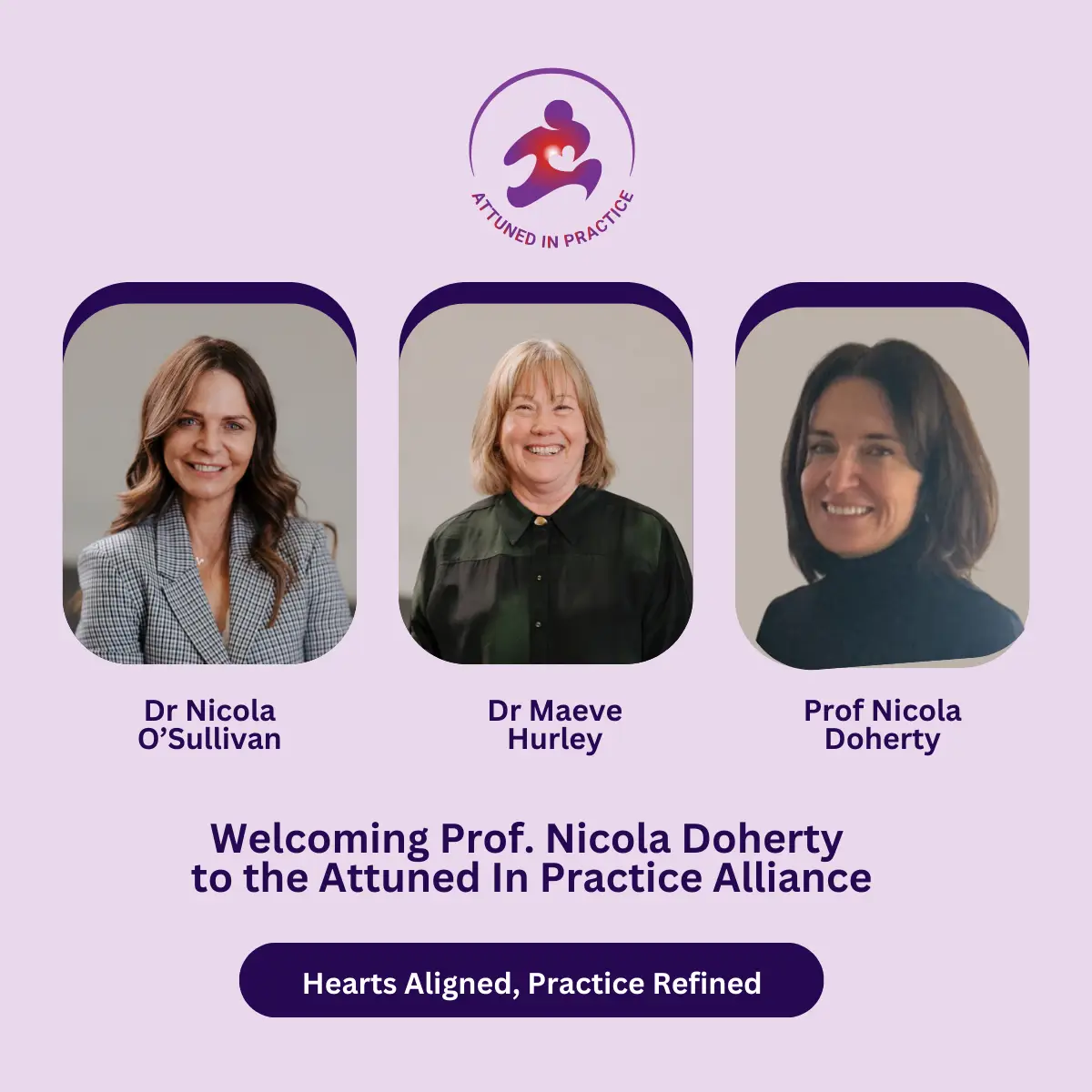
Being afforded time and attention to consider ourselves in work is a gift that supports us, the systems we work in and the people we serve. At Attuned in Practice we believe that sustaining practitioners on the frontline is essential and is achieved in many ways, central of which is in the creation of a space to think and feel.
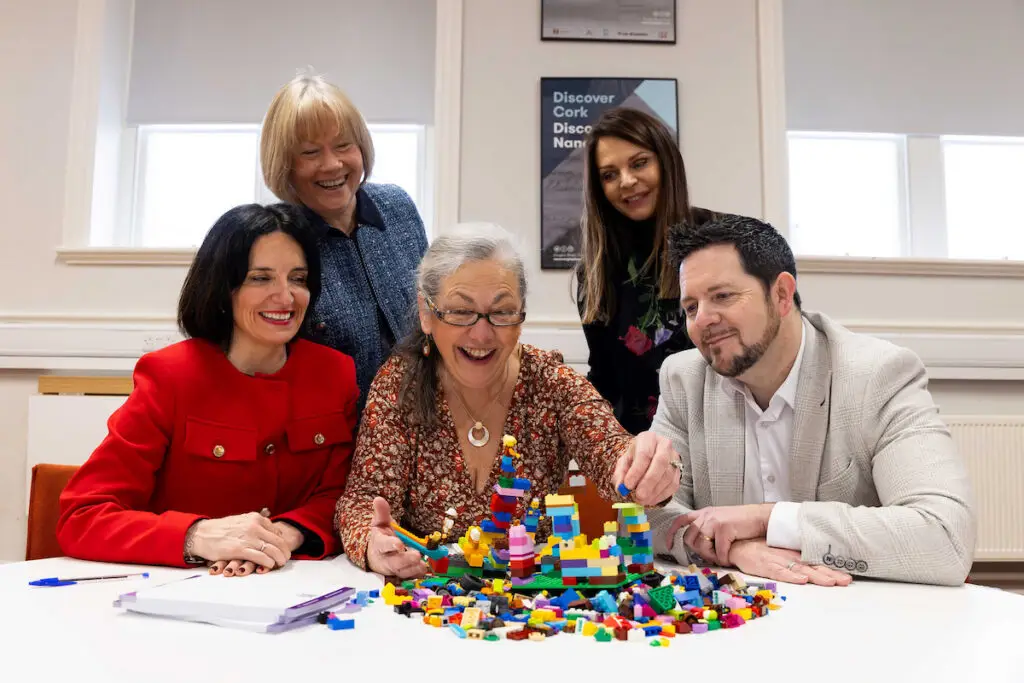
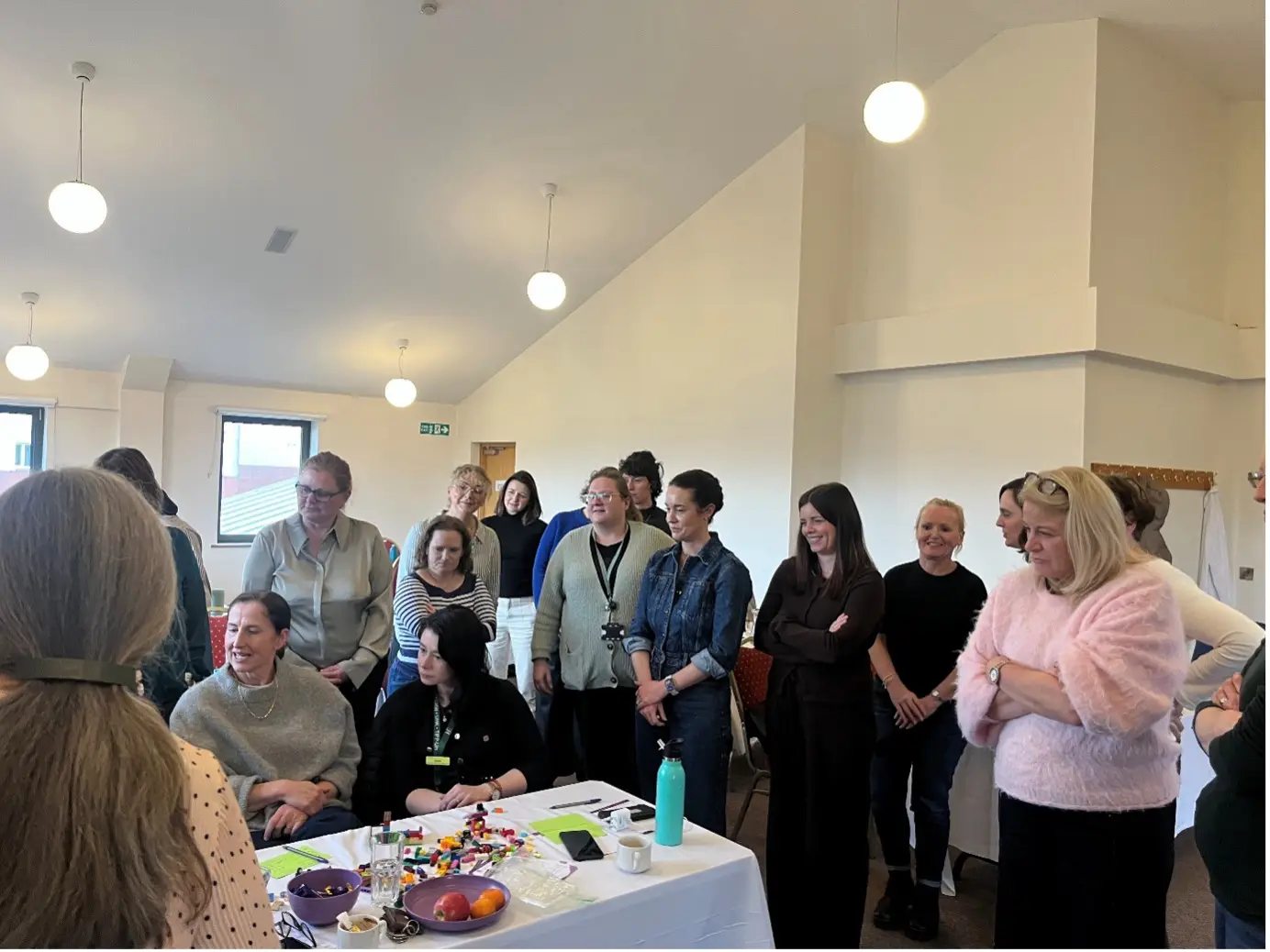
On March 5th, at our 6th Annual Conference, practitioners arrived with openness, curiosity, courage, generosity and a shared willingness to reflect.
More than doing, the importance of being
We were invited early on to bring attention to ourselves. Often bringing attention to ourselves is challenged in settings that are busy, demanding and where there is a sense of urgency. However, through breath, pace, and presence, we saw what it looks like to be attuned not just to others, but inwardly. This modelling of self-regulation and connection set the tone for something deeper, exploring where our personal and professional selves meet.
Because in frontline work, that meeting point matters. And yet, as was explored, many of the systems we work within can pull us away from that place. Performative cultures, pressure to deliver, and the quiet (or not-so-quiet) fear of failure can reduce our capacity to stay present. William Halton suggests, “The system often supports the task and blocks the relating.”
The world we are working within
We are working in a context that has shifted significantly. There was a time when dependability and continuity of institutions were more widely assumed. Today, many practitioners find themselves in environments where uncertainty is higher, trust can feel more fragile, and mistakes are less easily held. Tim Dartington speaks to this shift, describing how failure can become something that is punished like a sin, rather than understood as part of learning (Dartington, 2016).
The result?
• Fear.
• Withdrawal.
• A closing down rather than an opening up.
In these environments, we can develop what Esther Bick describes as a “second skin” – a protective layer that shields us, but also reduces our permeability (Bick 1968). Our capacity to feel and connect can become dulled. And yet, the work asks the opposite of us.
Returning to ourselves
Quality work cannot be sustained alone. We require connection, joined up thinking and a willingness to be open to discovering how we are impacted. Throughout the day, there was a gentle but persistent invitation:
To reconnect.
To notice where we are within the wider systems we work in.
To allow space for vulnerability.
To consider self-compassion not as a luxury, but as something essential.
Spaces like those offered by Attuned in Practice invite practitioners to come together and develop a shared sense of humanity.
Connection, community, and shared experience
There was something particularly powerful in the generosity of those who shared moments of honesty, including the willingness to speak about mistakes. When one person steps into vulnerability, it gives others permission to do the same. And in that, something shifts from isolation to connection, from performance to presence. The day itself became a kind of tapestry woven from experience, thought, feeling, and reflection.
Why spaces like this matter
At Attuned in Practice, there is a clear belief:
That quality work cannot be sustained alone.
Practitioners need spaces where they can pause.
Where they can reflect.
Where they can reconnect with the values and purpose that brought them into the work in the first place.
Not as an “add-on”, but as something central to practice. When practitioners are supported in this way, it doesn’t just benefit them — it shapes how they show up, how they relate, and ultimately, the care and service experienced by others.
A closing reflection
By the end of the day, there was a noticeable shift. Less in what people knew and more in how people felt. More grounded. More connected. More present.
When we consider how we are in our work and attempt to make sense of that, we are bringing together reflection and learning from experience. We are talking about learning from within (Stapley, 2006).
Perhaps that is the real work.
Not just gathering knowledge, but creating the conditions where practitioners can return to themselves and from there, return to their work with renewed clarity and care.