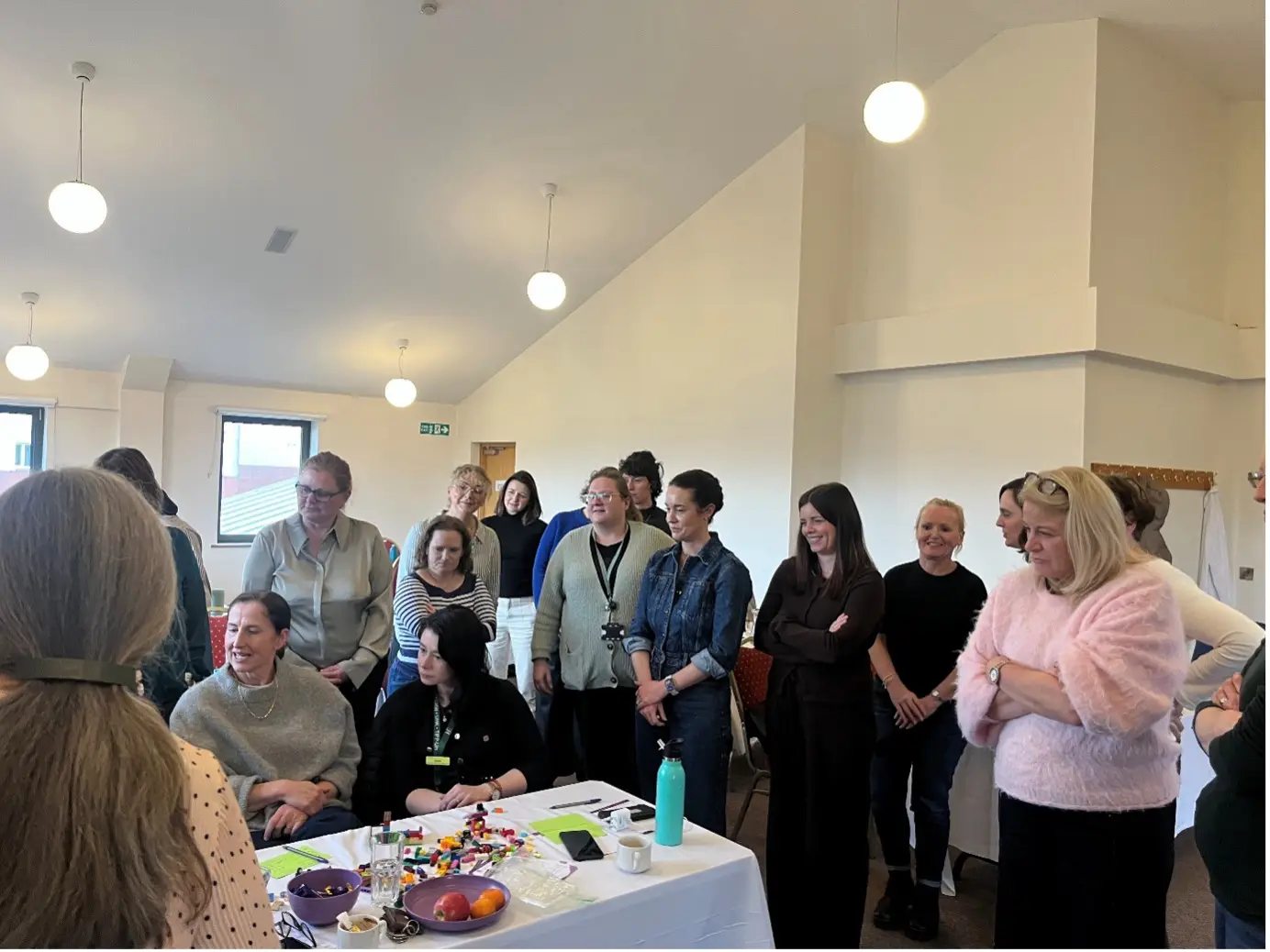
Hosted by Jim Sheehan, director of SHEP, the session delved into the seldom-discussed themes of humility and resilience within professional practice. Jim highlighted the importance of humble service in frontline roles and encouraged challenging systemic powers and advocating for necessary changes. This perspective is crucial, he noted, for deepening the understanding of one’s daily professional interactions.
Dr. McMahon: A Touchpoint Session
Dr McMahon, who has over three decades of diverse clinical and teaching experience, guided attendees through exercises aimed at enhancing their resilience and vulnerability. Her extensive background includes significant roles in settings from the Irish prison service to private practice, and she is currently an Assistant Professor in Psychotherapy at DCU, where she also chairs the Professional Diploma in Clinical Supervision.
The session not only served as a platform for reflection but also offered CPD accreditation, making it a valuable opportunity for professional development. Priced at only €30, this event was accessible to a broad range of practitioners seeking to enrich their capabilities and understanding in dealing with complex professional dynamics.